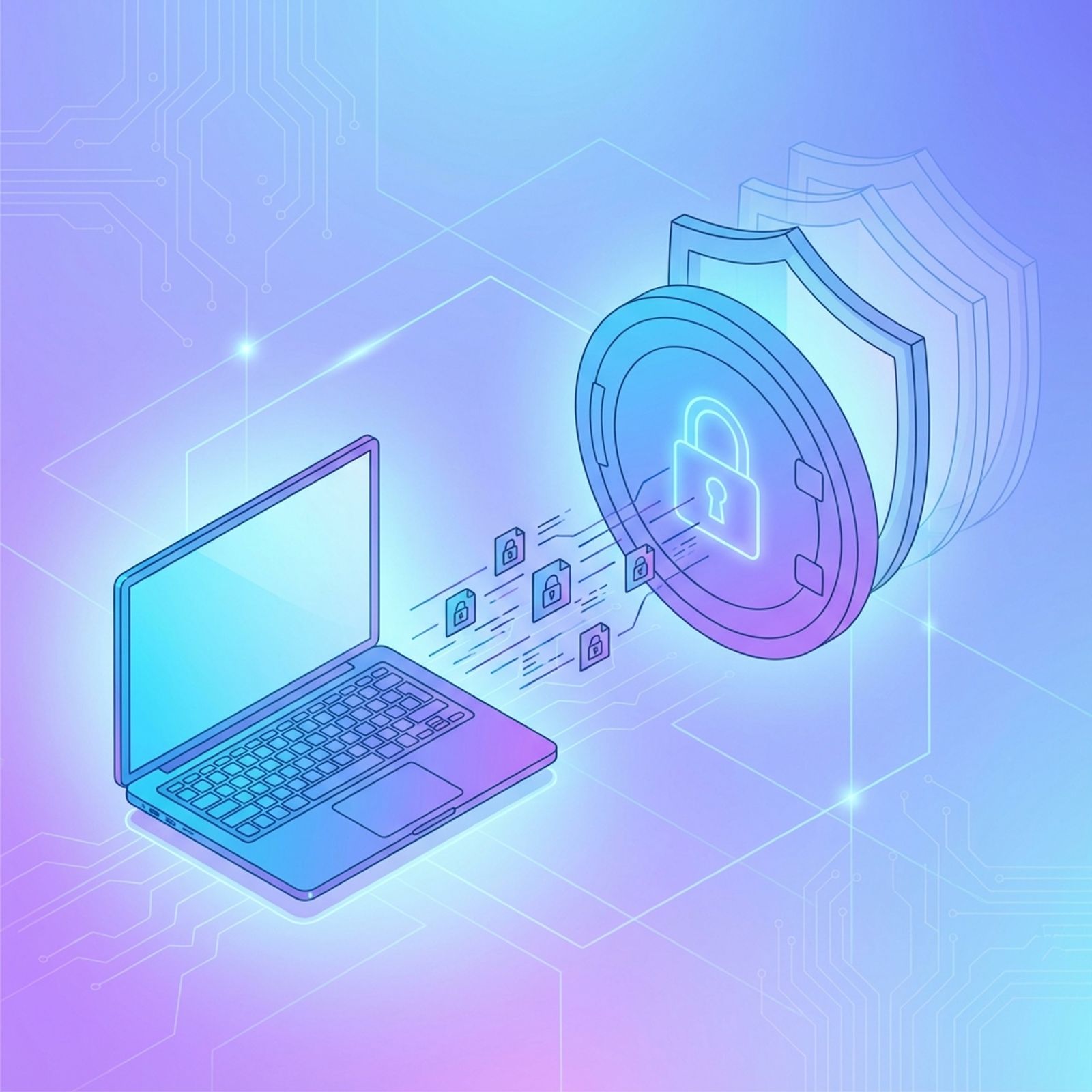
My First Step into Security: Building a Zero-Knowledge Vault
Personal Note: This blog post is the start of my journey into the world of security and encryption. I’ve decided to build a “Zero-Knowledge” file vault—a system where not even the server admins (me!) can see the files. This series will document everything I learn along the way, from the basic concepts to the nitty-gritty code.
📚 What I’m Building
I’m building Telegram Vault, but more importantly, I’m building my understanding of privacy-first architecture.
The core idea is simple but powerful: Zero-Knowledge Encryption.
- What: The fundamental guarantee that your files are encrypted before they leave your device.
- Why: Traditional cloud storage can access your files; I want to build something that cannot—by design.
- How: Master Password → PBKDF2 key derivation → AES-256-GCM encryption → Only encrypted data reaches the servers.
This series isn’t just about the code; it’s about the thinking process, the design decisions, and the “aha!” moments I’m having as I figure this out.
🗺️ The Learning Roadmap
Here is the path I’m taking. I’ll be writing about each of these topics as I implement them:
1. The Foundation
- Zero-Knowledge Encryption Explained: I’ll break down the core principle—why privacy isn’t a feature, but a mathematical guarantee.
- Browser-Side Decryption: How to move crypto operations from the server to your browser, ensuring plaintext never touches the cloud.
2. Architecture & Storage
- Telegram as a Storage Backend: Why I chose Telegram’s API for unlimited storage instead of AWS, and how it works.
- S3 Backup Storage: Implementing a “belt-and-suspenders” approach for redundancy.
3. Advanced Features
- Envelope Encryption: An architectural shift to enable instant file sharing without re-encrypting the whole file. (This was a huge learning curve!)
- Resumable Uploads: Handling network interruptions gracefully so large files don’t fail halfway.
- Feature Flags: How to roll out these complex changes safely without breaking everything.
4. Security & Privacy Deep Dives
- Encrypted Video Streaming: Solving the challenge of streaming video that doesn’t exist as a normal file on the server.
- Recovery Codes: How to handle “forgotten passwords” in a system that can’t reset passwords (because it doesn’t know them).
- Rate Limiting Without Logging: Protecting against abuse without spying on users.
- Privacy-Preserving Audit Logs: How to track security events without compromising user privacy.
- Zero-Knowledge API Design: Designing REST endpoints when the server is blind to the data it’s handling.
🚀 Join Me on This Journey
This project is open source, and I’m learning as I go. If you’re interested in security, encryption, or just building complex systems, I hope you’ll find these notes useful.
Next up, I’ll be diving deep into Zero-Knowledge Encryption—the math that makes this all possible.
Stay tuned!