DSPy + LiteLLM + ChatGPT: Build Smarter AI Pipelines in 2026
The Problem With Manual Prompt Engineering
If you’ve spent any meaningful time building LLM-powered applications, you know the drill. You craft a prompt, it works beautifully in testing, and then it quietly falls apart in production when the input varies slightly. You tweak it, test it again, and two weeks later a model update breaks everything. You’re not building software anymore — you’re babysitting strings.
Manual prompt engineering is fragile by design. It couples your application logic to specific phrasing, model quirks, and brittle formatting conventions. It doesn’t version well, it doesn’t optimize well, and it certainly doesn’t scale well. In 2026, as LLM applications move from experiments to production infrastructure, this approach is no longer acceptable.
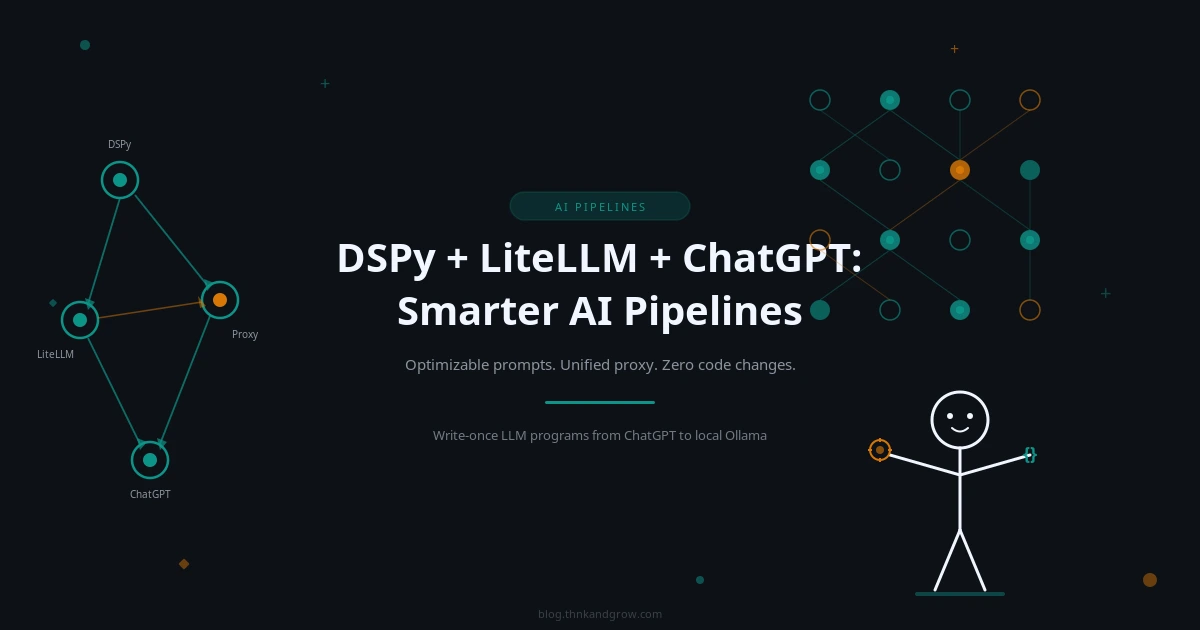
The good news is that a three-layer architecture has emerged to solve exactly this problem: DSPy for intelligent, optimizable pipeline logic; a CLI Proxy API like LiteLLM for unified model access, cost control, and flexibility; and ChatGPT-compatible APIs as the universal interface standard that ties everything together. Each layer solves a distinct problem, and together they form one of the most practical stacks for building production-grade LLM systems available today.
This post walks through each layer in depth, shows you how to wire them together, and covers the real-world patterns that make this architecture genuinely powerful — not just in theory, but in deployed systems.
What Is DSPy and Why It Changes the Game
DSPy (Declarative Self-improving Python) was born out of Stanford’s NLP group, led by Omar Khattab, with a deceptively simple premise: stop writing prompts, start writing programs. Instead of manually crafting prompt strings and hoping they generalize, DSPy asks you to define the signature of what you want — the input fields, the output fields, and an optional description — and then lets the framework figure out how to prompt the model to achieve it.
The core abstractions are worth understanding deeply:
- Signatures define the input/output contract of a language model call. A signature like
question -> answertells DSPy what goes in and what should come out. You can extend these with typed fields and field-level descriptions to guide behavior. - Modules are composable building blocks that wrap signatures with reasoning strategies.
dspy.ChainOfThoughtadds intermediate reasoning steps before producing an answer.dspy.ReActenables tool-using agents that can call functions and act on results iteratively. - Teleprompters and Optimizers are DSPy’s secret weapon. Tools like
BootstrapFewShotandMIPRO v2take your pipeline and a small labeled dataset and automatically generate, select, and optimize the few-shot examples and instructions that maximize your defined metric. They compile better prompts than most engineers write by hand.
The philosophical shift is significant. You’re no longer a prompt engineer — you’re a program architect. Your job is to define the structure and evaluation criteria of your pipeline. DSPy’s job is to find the optimal way to communicate that structure to whatever language model you’re using. This separation of concerns is what makes DSPy-based pipelines maintainable, testable, and model-agnostic in ways that raw prompt strings never can be.
What Is a CLI Proxy API and Why You Need One
A CLI Proxy API is middleware that sits between your application and one or more LLM providers, exposing a unified, OpenAI-compatible interface regardless of what’s running underneath. You point your application at http://localhost:4000 instead of api.openai.com, and the proxy handles routing, authentication, cost tracking, caching, and fallback logic transparently.
The leading tools in this category each serve slightly different needs:
- LiteLLM is the most production-ready option, supporting 100+ providers under a single interface. Its
litellm proxyCLI command spins up a local server in seconds, and its enterprise tier adds Redis caching, PostgreSQL logging, load balancing, and team-based cost controls. - Ollama makes running local models (Llama 3, Mistral, Gemma, and others) as simple as
ollama run llama3, and exposes an OpenAI-compatible server atlocalhost:11434. - vLLM is the go-to for high-throughput GPU inference in self-hosted environments, with PagedAttention for efficient memory management.
- OpenRouter provides cloud-based routing across dozens of frontier models, useful when you want multi-provider access without running your own infrastructure.
- LocalAI and LM Studio round out the local inference options, each with their own trade-offs around ease of use and model format support.
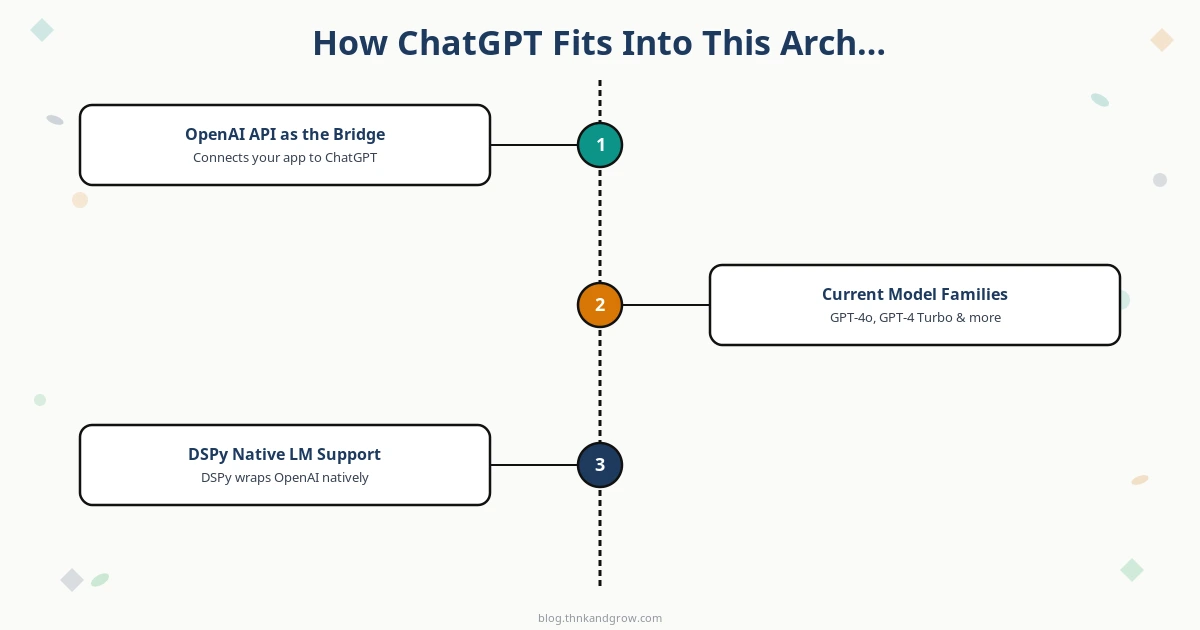
The core benefits of this layer are concrete and compounding. You eliminate vendor lock-in — your application code never needs to change when you switch models. You gain cost control through routing rules that send expensive tasks to powerful models and cheap tasks to lightweight ones. You enable private inference by swapping cloud APIs for local models without touching application logic. And you get production-grade observability that DSPy alone simply doesn’t provide.
How ChatGPT Fits Into This Architecture
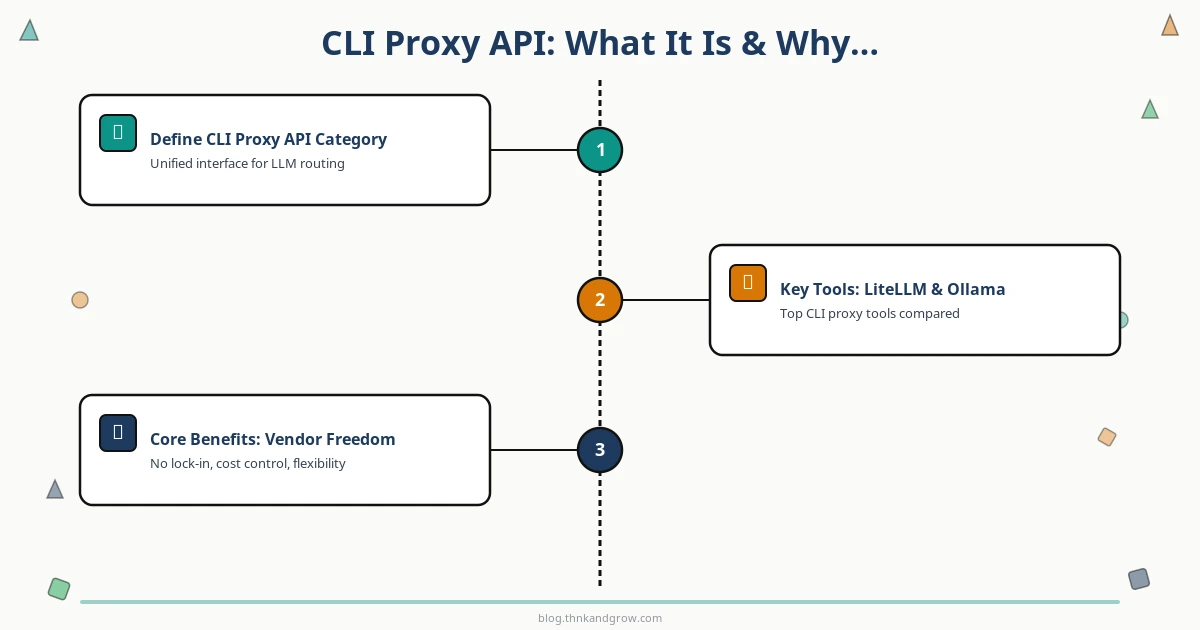
OpenAI’s API has become the de facto interface standard for the LLM ecosystem — not because it’s the only option, but because virtually every proxy tool, local inference server, and alternative provider has chosen to emulate it. The /v1/chat/completions endpoint, the message format, the streaming protocol — these have become the HTTP of LLM communication.
OpenAI’s current model family in 2026 offers meaningful trade-offs for pipeline design:
- GPT-4o remains the workhorse for complex reasoning, multimodal tasks, and high-stakes generation where quality is non-negotiable.
- GPT-4o-mini is the cost-efficiency champion — surprisingly capable for classification, extraction, summarization, and routing decisions at a fraction of the cost.
- o1 and o3 reasoning models introduce extended thinking chains for problems that benefit from deep deliberation, though at higher latency and cost. They’re best reserved for tasks where reasoning depth genuinely matters.
DSPy integrates with all of these natively through its dspy.LM wrapper. The key is that this same wrapper works identically whether you’re pointing at OpenAI directly or at a proxy that emulates the OpenAI interface. The pattern is clean and consistent:
import dspy

lm = dspy.LM(
    "openai/gpt-4o",
    base_url="http://localhost:4000",  # LiteLLM proxy
    api_key="your-litellm-api-key"
)
dspy.configure(lm=lm)
Change the base_url to point at Ollama, vLLM, or OpenRouter, and your entire DSPy program runs against a completely different model without a single other line of code changing. That’s the power of the interface standard.
Setting Up the Stack: DSPy + LiteLLM Proxy + ChatGPT
Getting this stack running takes less than ten minutes. Here’s the practical path:
Step 1: Install the dependencies
pip install dspy-ai litellmStep 2: Create a LiteLLM configuration file (litellm_config.yaml):
model_list:
  - model_name: gpt-4o
    litellm_params:
      model: openai/gpt-4o
      api_key: sk-your-openai-key
  - model_name: gpt-4o-mini
    litellm_params:
      model: openai/gpt-4o-mini
      api_key: sk-your-openai-key
Step 3: Launch the proxy server
litellm --config litellm_config.yaml --port 4000Step 4: Write your DSPy program
import dspy

# Configure DSPy to use the LiteLLM proxy
lm = dspy.LM(
    "openai/gpt-4o",
    base_url="http://localhost:4000",
    api_key="any-string"  # LiteLLM handles auth internally
)
dspy.configure(lm=lm)

# Define a simple Chain of Thought Q&A module
class SimpleQA(dspy.Module):
    def __init__(self):
        self.generate = dspy.ChainOfThought("question -> answer")

    def forward(self, question):
        return self.generate(question=question)

# Run it
qa = SimpleQA()
result = qa(question="What are the trade-offs between GPT-4o and GPT-4o-mini?")
print(result.answer)
That’s a complete, working DSPy pipeline running through a production-capable proxy. From here, you can add optimizers, swap models, enable caching, and scale horizontally — all without restructuring your application logic.
Real-World Use Cases for This Stack
The abstract architecture becomes compelling when you see it applied to concrete problems:
Cost-Optimized Pipelines
Most LLM applications have a mix of task complexity. A document processing pipeline might need GPT-4o for nuanced synthesis but only GPT-4o-mini for entity extraction or classification. With LiteLLM’s routing rules, you can define this logic once in the proxy configuration and let your DSPy modules stay model-agnostic. The result: the same quality output at 60–80% lower inference cost, with no changes to application code.
Private and Enterprise Inference
For teams operating under data residency requirements or handling sensitive information, the proxy layer enables a clean swap from ChatGPT to a locally-hosted Ollama model. Change one line in your LiteLLM config, and your entire DSPy program now runs against Llama 3 on your own hardware. Your DSPy signatures, modules, and optimized prompts transfer completely — the framework doesn’t care what’s behind the OpenAI-compatible endpoint.
Multi-Model Experimentation
DSPy’s optimizers are most valuable when you can benchmark them across models. With the proxy layer, you can run MIPRO v2 against GPT-4o, GPT-4o-mini, and a local Mistral model simultaneously, compare metric scores, and make data-driven decisions about the cost/quality trade-off for your specific task. This kind of systematic experimentation is impractical without a unified interface layer.
Best Practices and Pitfalls to Avoid
Having the right tools is only half the battle. Here are the patterns that separate clean implementations from messy ones:
- Always use
dspy.configure(lm=...)as your primary model setup method. Avoid passing model instances directly to modules — the global configuration pattern keeps your code clean and makes model swapping trivial. - Enable LiteLLM’s caching early. Redis-backed caching can eliminate redundant API calls during development and optimization runs, saving significant cost. Configure it in your
litellm_config.yamlbefore you start running expensive teleprompter loops. - Don’t optimize prematurely. DSPy’s teleprompters are powerful, but running
MIPRO v2before your pipeline logic is stable wastes tokens and produces optimizations that become stale as you iterate. Get the structure right first, then optimize. - Test proxy connectivity before optimization runs. A misconfigured proxy that silently returns errors will cause DSPy optimizers to produce nonsensical results. Always run a simple
lm("hello")call and verify the response before kicking off any multi-step optimization loop. - Use LiteLLM’s PostgreSQL logging for debugging. When something goes wrong in a complex DSPy pipeline, having full request/response logs with latency and cost data is invaluable. Set this up from day one, not as an afterthought.
The Ecosystem at a Glance: Tools, People, and What’s Next
Understanding who’s driving this ecosystem helps you follow the right signals for where it’s heading. Omar Khattab, now at Databricks after his Stanford tenure, continues to lead DSPy development with strong institutional backing. The Stanford NLP Group remains the academic anchor for research contributions. On the infrastructure side, Ishaan Jaffer and the LiteLLM team have built what is arguably the most production-ready proxy layer in the ecosystem, with growing enterprise adoption validating the architecture.
DSPy 2.5 and beyond have brought meaningful improvements: native multi-LM support within a single program (different modules can use different models), improved async execution for high-throughput applications, MIPRO v2’s more reliable optimization convergence, and official bridges to LangChain and LlamaIndex for teams with existing investments in those frameworks.
Looking ahead, the most significant developments to watch are the deeper integration of structured outputs (native JSON schema enforcement now standard across major providers), the maturation of o3-class reasoning models for tasks that genuinely benefit from extended thinking, and the continued enterprise adoption of this stack for regulated industries where the private inference capability is non-negotiable.
Conclusion: Build Once, Run Anywhere
The core thesis of this architecture is simple but powerful: LLM application logic should be independent of the model it runs on, the provider it calls, and the prompts it uses to communicate. DSPy handles the logic and optimization. The CLI proxy handles the routing, cost control, and model abstraction. ChatGPT-compatible APIs provide the universal interface standard that makes the whole system composable.
Together, these three layers solve the real problems of production LLM development — not just the fun parts of getting a demo working, but the hard parts of maintaining it, scaling it, controlling its costs, and evolving it as models and requirements change.
The best way to internalize this architecture is to start small. Pick a single DSPy module — a ChainOfThought for a task you already have — spin up a LiteLLM proxy locally, and point DSPy at it using the dspy.LM pattern. Get that working end-to-end. Then add a second model to your proxy config and try swapping between them with a single line change. Once you feel how clean that abstraction is, the path to more complex pipelines, optimizer runs, and multi-model routing becomes obvious.
In 2026, the teams building the most maintainable and cost-efficient LLM applications aren’t the ones with the cleverest prompts. They’re the ones who stopped writing prompts altogether — and started writing programs instead.


